

Can police search your car in Florida? Yes, but only when you consent or a recognized legal exception applies. Officers may search without a warrant when they have probable cause, see evidence in plain view, conduct a lawful inventory, or perform another narrowly permitted search.
Get a free consultation with Galanter Law
Police cannot search a vehicle merely because they stopped it. Under the automobile exception, they need probable cause to believe the car contains evidence of a crime. You may refuse consent, although officers can proceed when another valid legal basis exists. As the Florida Sixth District Court of Appeal explains, the facts surrounding the search determine whether it was lawful.
A request to search can be intimidating, but you can calmly state that you do not consent. Never physically interfere. Record what happened as soon as it is safe, because a defense lawyer can later challenge an unlawful search in court.
Can police search your car in Florida without a warrant?
Most people know that the Fourth Amendment protects them from illegal searches. Under this rule, police usually need a warrant to look through your home. But the rules for cars are different. People often ask: can police search your car in Florida without a warrant? In many cases, the answer is yes.
This is because cars are mobile. If a driver sees the police, they could drive away and hide evidence. To stop this, courts created the “automobile exception” to the warrant rule. This exception makes it easier for police to search a car during a normal stop.
The automobile exception
The automobile exception allows officers to search your car if they have a good reason. This reason is called probable cause. If an officer has probable cause, they believe the car contains evidence of a crime.
They do not need a judge to sign a warrant first. They can start the search right there on the side of the road. This rule applies to any part of the car where the evidence might be hidden. Officers can also search any bags or boxes found inside the car if they think they hold evidence.
Probable cause and marijuana
In Florida, certain signs can give police the right to search. For many years, the smell of marijuana was a common reason. Even though hemp is now legal, the smell of burnt or raw marijuana still counts.
Officers in Florida do not have to prove they can tell the difference between hemp and marijuana. If they smell it, they may have probable cause to search your car. This can lead to serious drug charges if they find a large amount of a banned substance.
Consent and your rights
You always have the right to refuse a search. If an officer asks to look inside your car, you can say no. This is your right under the law. However, if you refuse, the officer might still search the car if they have another legal reason.
Even if you are arrested for a DUI, the police cannot always search the whole car. They must have a reasonable belief that more evidence of the DUI is inside the vehicle. If you feel your rights were violated, stay calm and call a lawyer.
Galanter Law is on call 24/7 to help you in a crisis. Knowing your rights during a traffic stop can help you protect your future.
What happens if you consent to a vehicle search?
When you give police consent, you give up your rights under the Fourth Amendment. This rule usually protects you from a search and seizure without a warrant. If you say yes to a search, the police do not need a warrant or a special reason to look through your car. This can lead to the discovery of evidence that may result in drug trafficking charges or other serious legal issues.
Your right to say no
You have the legal right to refuse a search of your car. If an officer asks to look inside, you can say, “I do not consent to a search.” This simple phrase is a key part of your rights during a traffic stop in Florida. While you can refuse, an officer might still search if they have another legal reason. For example, they may use probable cause if they see or smell something illegal in plain view, as noted by the Federal Law Enforcement Training Centers.
Limits on your consent
Consent must be voluntary to be valid in court. This means the police cannot use threats or force to make you agree to a search. Under the law, a search is not valid if it comes from duress or force. You also have the power to set the scope of the search. You can tell the officer they can look in the back seat but not the trunk. You can also change your mind and stop the search at any time.
Stay calm and avoid resistance
If you choose to refuse a search, it is vital to stay calm. Do not try to physically block the police or argue with them on the road. This can lead to resisting arrest charges. If you feel the police are breaking the law, do not fight back at the scene. Instead, keep a mental note of what happened. You should then share these facts with a lawyer who can help protect your rights in court later, as suggested by government safety guides.
Probable cause and the automobile exception
When you ask, “can police search your car in Florida,” the answer often rests on a legal rule called the automobile exception. Under the Fourth Amendment, police usually need a warrant to search private property. But cars are different because they can move quickly. If an officer has a fair reason to believe your car holds evidence of a crime. They may search it without waiting for a judge to sign a warrant. This fair reason is known as probable cause.
What counts as probable cause
Probable cause is more than a simple hunch or a gut feeling. It must be based on facts that would lead a sane person to think a crime happened or that evidence is present. In Florida, courts look at the whole picture to decide if an officer was right to search. For example, the scent of marijuana can give an officer the right to search your car, even if they cannot tell the difference between illegal pot and legal hemp. Knowing your rights during a traffic stop is vital if an officer claims they have a reason to search.
The scope of the search
If police have probable cause, they can search any part of the car where the item they are looking for might be. This includes the trunk, the glove box, and closed bags or containers. If they are looking for a large stolen TV, they likely cannot search a small pill bottle. However, if they suspect drugs, they can look almost anywhere. This broad power is why it is so important to have a lawyer check if the search was legal. If the police find items in a shared car, you could even face constructive possession charges.
Containers and closed spaces
The automobile exception covers more than just the seats and floors. If an officer has a legal reason to search the car, they can also open any containers inside it. It does not matter if the bag belongs to a passenger or the driver. As long as the object of the search could fit inside the container, the police may open it. If you feel an officer is overstepping, you should remain calm and document what happens. Challenging the scope of a search later in court is often the best way to protect your future.
Other situations that may permit a vehicle search
While probable cause is a common trigger, other legal reasons allow police to look through your car. These rules exist to help keep officers safe or save evidence after an arrest. But each case has clear limits on what the police can do and where they can look.
Search incident to arrest
If you are arrested in your car, police can sometimes search the area within your reach. This rule is often called a search incident to arrest. The goal is to make sure you do not have a weapon. It also stops you from trying to hide or break evidence. They can only search the main part of the car if they think it holds evidence of the crime that led to your arrest.
For example, if you face DUI defense needs, an officer might search for open cans or bottles. But a simple stop for a ticket does not always give the right to a full search. You should know your rights during a traffic stop to see if an officer goes too far. The Federal Law Enforcement Training Centers state that a DUI arrest does not always mean police can search the whole car without a reason.
Impound and inventory searches
When police lawfully tow your car, they may do an inventory search. This is not meant to find proof of a crime. Instead, it is a set task to list your things. It helps protect the police if you claim items are lost or stolen. The search must follow a clear plan from the police department to be legal.
If they find illegal items like drugs during this list, you could face drug crimes defense issues. The police cannot use a tow as a fake reason to search for things they could not find otherwise. If the tow was not legal, any proof they find might be thrown out in court.
Consent and protective sweeps
Police can search your car if you give them your okay. This is called a consent search. You have the right to say no. Your okay must be given freely. It cannot be forced by threats. The Supreme Court has ruled that consent must not be forced by any means.
In some cases, police may also do a “protective sweep” if they fear for their safety. They might look in spots where a weapon could be hidden. This is a quick check, not a deep search of your whole car. Knowing how can police search your car in Florida works requires knowing these small but key facts.
| Search Type | Legal Goal | Main Limit |
|---|---|---|
| Search Incident to Arrest | Find weapons or evidence | Only areas within your reach |
| Inventory Search | List items after a tow | Must follow standard policy |
| Consent Search | Search with your okay | You can say no at any time |
| Protective Sweep | Keep the officer safe | Only to find hidden weapons |
Does a traffic violation allow police to search the car?
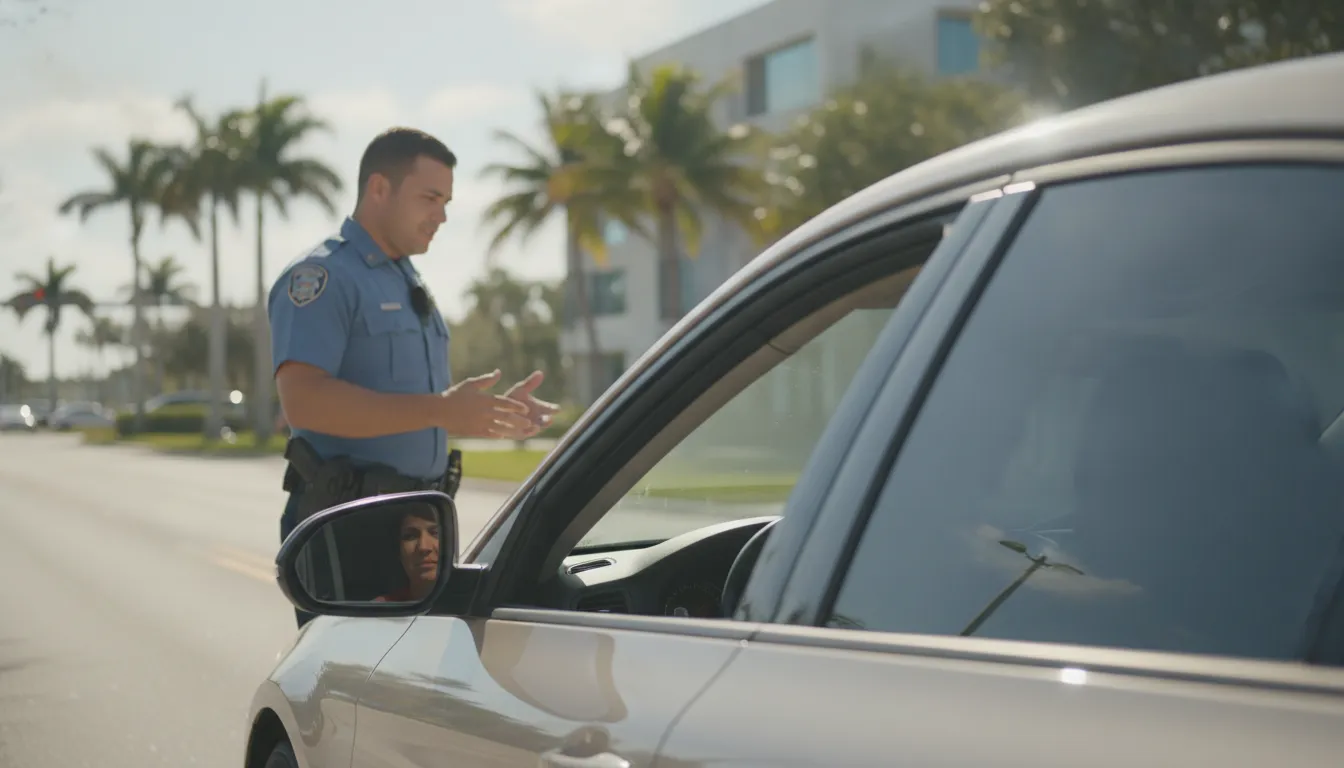
A simple traffic stop is a common event, but it does not give police the right to look through your car. While an officer can pull you over for a broken tail light or speeding, they need more to search. You should know your rights during a traffic stop to protect yourself. A stop must be legally justified for an officer to even approach your car window per Florida law.
Limits on stop length
Police cannot hold you for a long time just to look for a reason to search. A traffic stop should only last as long as it takes to handle the traffic issue. This includes checking your license and writing a ticket. If the task is done, the officer should let you go. They cannot keep you waiting for a drug dog without a good reason. Keeping you longer than needed may violate the Fourth Amendment.
Probable cause and searches
Officers need a specific reason called probable cause to search your car without a warrant. This means they must have a good reason to think your car holds evidence of a crime. For example, if an officer smells marijuana, they may have a right to search under the automobile exception. However, a simple ticket for a traffic rule is not enough to start a search. Even a DUI arrest does not allow a full search unless the officer thinks more evidence of the crime is inside according to federal guidelines.
Handling police requests
An officer may ask for your consent to look inside your car. You have the right to say no. Refusing a search is not an admission of guilt. If you say yes, you give up your rights. If they search anyway, do not resist. You can fight the search later in court with help from a Galanter Law attorney. Fighting at the scene could lead to charges for resisting arrest which makes your case harder to win.
Ask Galanter Law to review the vehicle search
What should you do if police search your car?
A traffic stop can move from a simple talk to a search very fast. If you find yourself in this spot, your acts can shape your legal future. It is vital to stay calm and protect your rights during a traffic stop. You do not have to help the police find a reason to arrest you. Use these steps to handle the event with care.
Keep your cool and stay safe
When you see lights in your mirror, pull over in a safe place. Keep your hands on the wheel so the officer can see them. Do not reach for your glove box or under your seat until they ask you to do so. Quick moves can make an officer feel unsafe and lead to more stress. Police safety is often their first thought, so follow their safety orders without a fight.
You must show your driver license, car papers, and proof of insurance if asked. But you do not have to answer deep questions about where you are going or what is in your car. Staying polite but quiet is your best move. This helps you avoid saying things that might hurt you in court later.
State your non-consent clearly
If an officer asks to search your car, you have the right to say no. Even if you think you have nothing to hide, you should still refuse. You can say, “I do not consent to a search of my car.” Under the law, your consent must be free and not forced by threats. By saying no, you keep the right to fight the search in court later.
The officer may still search your car if they have probable cause to think it holds proof of a crime. If they start a search anyway, do not try to stop them with your body. Resisting could lead to extra resisting arrest charges. Stand back and watch what they do from a safe distance.
Steps to take during and after a search
- Do not block the officers. Even if you think the search is wrong, let them finish. Any physical fight will only lead to more trouble and charges at the scene.
- Take mental notes of the details. Try to remember what the officer said led to the search. Note the time, place, and the names or badge numbers of the officers who were there.
- Watch for a body camera. Ask if the officer has a camera on. This footage is key for your defense if the police did not follow the law during the stop.
- Stay silent about the facts. Do not talk about what the police found or why it was in the car. Anything you say can be used as proof against you in a criminal case.
- Ask for a lawyer right away. If the search leads to an arrest or a charge, stop talking and ask for help. A lawyer can help you file a motion to suppress any proof found in a bad search.
Protect your future and your record
An illegal search can lead to life-altering drug trafficking charges or other felonies. If your rights were ignored, the court might throw out the proof found during the stop. This often happens through a motion to suppress. This motion asks the judge to block proof that the police got without a warrant or a valid reason.
You should document the interaction as soon as you are free to do so. Write down every detail while it is fresh in your mind. This helps your legal team build a strong fight against the state. At Galanter Law, we are here 24/7 to help you face these charges. We offer a free first meeting to look at your case and find the best way forward.
How a Florida criminal defense lawyer reviews the search
When you hire a criminal defense lawyer, the first task is to check if the police followed the law. In Florida, officers must have a clear reason to pull you over. A lawyer will look at the police report to see if the stop was valid. If the stop was not legal, any evidence found later could be thrown out of court. This is a key step in protecting your rights during a traffic stop.
Evaluating the basis for the stop
A lawyer reviews body camera footage and logs to find out why the officer approached your car. Florida law says a traffic stop must be justified by a traffic rule or a crime (Source: Florida Third District Court of Appeal). If the officer claims they smelled marijuana, the lawyer will check if that claim holds up. Florida courts have ruled that the smell of marijuana can provide probable cause, even if it might be legal hemp.
Checking for consent and duration
Many vehicle searches happen because a driver gives consent without knowing they can say no. A defense lawyer will watch the video to see if you were forced to agree. Consent must be voluntary and not the result of threats or pressure from the police (Source: Schneckloth v. Bustamonte). The lawyer also tracks how long the stop lasted. Police cannot hold you on the side of the road longer than needed for the ticket or warning.
Filing a motion to suppress
If the lawyer finds that the police violated your rights, they may file a motion to suppress the evidence. This asks the judge to block the state from using items found in your car, such as drugs or weapons. This is vital when facing charges related to constructive possession, where the state must prove you knew about and controlled the items. At Galanter Law, we use over 35 years of experience to find these mistakes and fight for your rights.
Frequently Asked Questions
Can police search your car without a warrant in Florida?
Yes, police in Florida may search a car without a warrant if they have a strong reason to believe it holds proof of a crime. This is called the automobile exception to the Fourth Amendment. Because cars are mobile, the law allows officers to skip the warrant process in some cases. They must still have facts that show a crime likely took place before they can look inside your car.
Can you refuse a search of your vehicle by the police in Florida?
You have the legal right to say no if an officer asks to search your car. However, the police may still look inside if they have a legal reason. For example, they might see illegal items in plain view or smell drugs. According to the FLETC, a search can go forward without your consent if there is a separate legal cause. You should always state that you do not agree to the search.
Does being arrested for DUI automatically allow for a vehicle search in Florida?
A DUI arrest does not give the police the right to search your entire car. Officers may only look for items that are linked to the crime of the arrest. For instance, they might search for open bottles or drug tools. Per the FLETC, the search must be tied to a specific legal reason. It is not enough to just take you into custody. An attorney can help check if the search was done the right way.
What should you do if police violate your rights during a vehicle search?
If you think the police did an illegal search, stay calm and do not fight back. Do not try to block the officers, as this could lead to more trouble. Instead, write down exactly what happened and what the police said. According to the FLETC, you should share these details with a lawyer. A skilled lawyer can help you fight the evidence in court and keep your legal rights safe after a stop.
Ready to protect your rights after a car search in Florida?
Waiting to act after a police search or an arrest can lead to harsh results that last for years. If you do not move fast, you might lose the chance to fight a bad search in court. The state is already building a case against you right now. A strong defense needs time to find facts and talk to the people who saw what happened. You could face a long stay in jail or lose your job if you do not get help today. Starting your defense now gives you the best shot to clear your name and keep your freedom. We know how to check if the police broke the law when they stopped your car. Our team will help you with your drug crimes defense by looking for errors that can make the state drop the charges against you.
Ready to talk to a lawyer? Call (305) 576-0244 to call for a confidential consultation.
