

Seeing police officers at your front door can be alarming, especially when they ask to come inside. Can police search your home in Florida? Usually, officers need a valid search warrant. Yet several narrow exceptions may allow entry or a limited search without one, including valid consent, an emergency, or evidence in plain view from a lawful position.
Concerned about a police search? Contact Galanter Law or call (305) 576-0244 to discuss what happened and protect your next steps.
The details matter. A lawful entry does not always give officers the right to search every room, drawer, phone, or container. If officers arrive, stay calm, do not physically resist, and do not interfere. You can clearly say that you do not consent to a search and ask to speak with a lawyer. This guide explains the basic rules and practical steps, but it is not a substitute for advice about your specific case.
Can police search your home in Florida without a warrant?
Police generally cannot search a Florida home without a warrant or a recognized exception to the warrant requirement. The home receives especially strong protection under the Fourth Amendment to the United States Constitution and article I, section 12 of the Florida Constitution. Those rules protect people from unreasonable government searches and seizures.
The basic warrant rule
A judge may issue a search warrant after reviewing facts that support probable cause. The warrant should identify the place to be searched and the people or items officers may seize. This particularity requirement helps keep a search tied to its stated purpose instead of becoming an open-ended search.
For example, a warrant that authorizes a search for a large stolen television may support a search of rooms where that item could fit. It would not normally justify opening a tiny jewelry box merely to look for the television. Scope questions can become more complex when a warrant also lists smaller evidence, records, or electronic devices.
Exceptions are fact dependent
A warrantless search is not automatically unlawful. Courts recognize exceptions, but police and prosecutors must be able to justify their use under the facts. Consent, urgent danger, hot pursuit, and plain view are common examples. The reach of each exception is limited.
A resident should not try to decide the legal issue by arguing at the doorway or blocking officers. State a lack of consent calmly, avoid physical interference, and let a defense lawyer challenge the search through the proper court process later. For a related explanation of how location changes the analysis, read the guide to police searches of cars in Florida.
What a Florida home search warrant should tell you
A Florida home search warrant should identify the place officers may search, describe the evidence they may look for, and show a judge’s approval. If officers say they have one, you may calmly ask to see it. Read it if officers allow you to do so, but do not grab it or obstruct the search.
Place, items, and scope
The description of the place matters. Questions may arise when a property contains separate apartments, detached buildings, locked rooms, or areas controlled by another person. The list of items matters too because it can affect where officers may reasonably look.
Officers may take items named in the warrant. They may also seize some evidence they lawfully see during the search if its incriminating character is immediately apparent. That does not give them an automatic right to expand the search into every space.
Details worth noting
Without getting in the way, note the issuing court, address, date, listed evidence, and any inventory or receipt left after the search. Write down what you remember as soon as it is safe. Include which rooms officers entered, what they asked, what was taken, and who was present.
Do not sign a statement you do not understand. Do not guess when answering questions. A warrant permits the authorized search; it does not require you to explain evidence or waive your right to seek counsel.
When can police enter a Florida home without a warrant?
Police may enter without a warrant only when a recognized exception fits the facts, such as voluntary consent, emergency aid, hot pursuit, plain view from a lawful position, or a limited protective sweep. An exception authorizes only what its purpose reasonably requires; it does not automatically permit a complete search of the home.
| Possible exception | What may allow entry or seizure | Important limit |
|---|---|---|
| Consent | A person with actual or apparent authority voluntarily agrees | The search generally must stay within the consent given |
| Exigent circumstances | An urgent need, such as emergency aid, hot pursuit, or an imminent threat to evidence | Entry and search should relate to the urgent need |
| Plain view | Officers lawfully present see evidence whose incriminating nature is readily apparent | Plain view does not itself permit an unlawful entry |
| Protective sweep | During a lawful in-home arrest, officers reasonably suspect a dangerous person may be nearby | A sweep is limited to places where a person could hide |
If police relied on an exception instead of a warrant, speak with a Miami criminal defense attorney promptly about the facts and available records.
Lawful entry does not mean unlimited search
An exception can justify a specific action without authorizing a full search. If police enter to help an injured person, they may address that emergency and secure immediate hazards. The emergency does not necessarily permit a search of unrelated closed containers after the danger ends.
Authority and scope still matter
A person can generally consent only to areas over which that person has authority. Roommates, guests, landlords, and family members may have different levels of access and control. A court may examine what officers reasonably believed at the time, not just what became clear later.
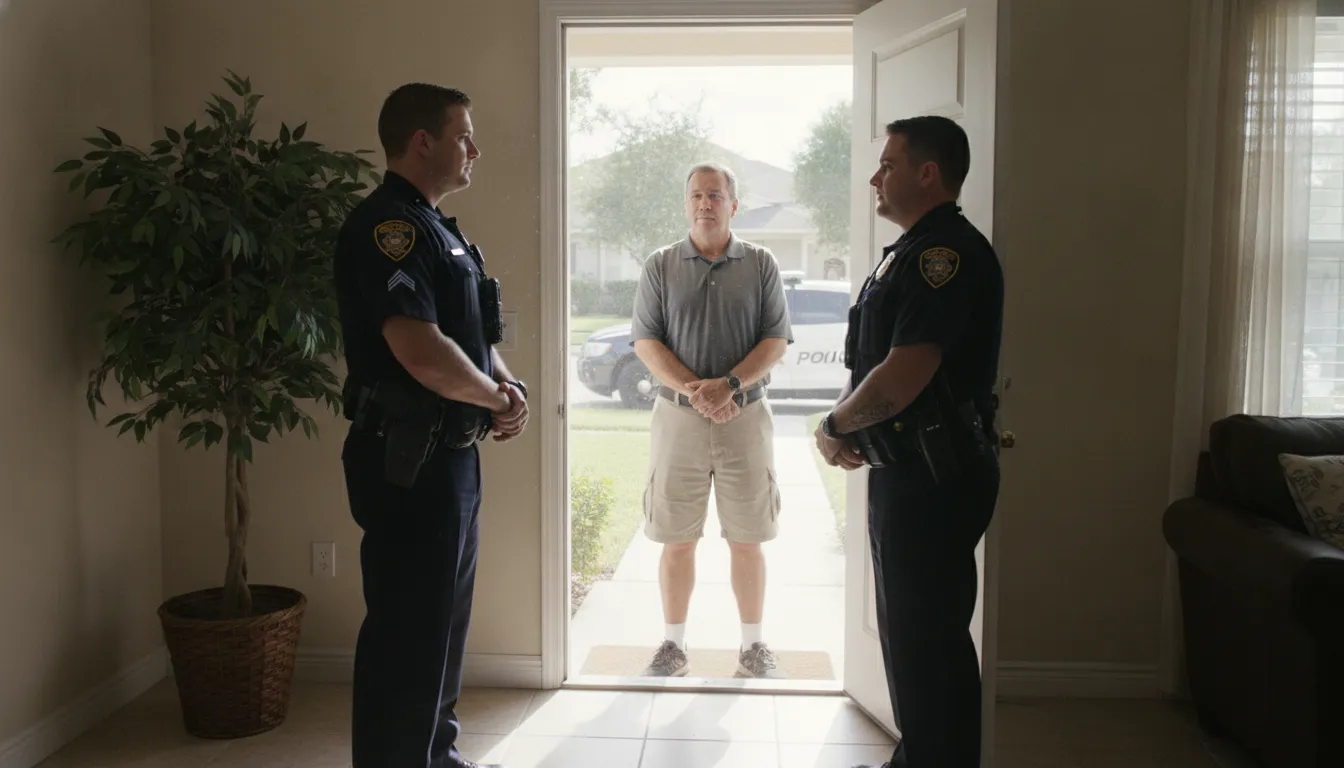
How consent can change a home search
Voluntary consent can allow officers to search without a warrant, but its validity and scope depend on the words used, the person’s authority, and the surrounding circumstances. Permission to enter and talk is not necessarily permission to search every room or container. Consent is often one of the most disputed issues after a search.
You may decline consent
If officers ask for permission, a resident can say, “I do not consent to a search.” Use a calm voice and do not argue or physically block entry. If officers proceed anyway, repeat the statement only if safe, then preserve the issue for a lawyer.
Declining consent is different from interfering with police. Do not hide, destroy, or move possible evidence. Do not tell another person to do so. Those acts may create separate legal problems and make the situation more dangerous.
Consent has a scope
The wording of consent can affect its reach. Permission to enter and talk is not always permission to search the whole home. Permission to look in one room may not extend to a locked container controlled by someone else.
A person may attempt to limit or withdraw consent, but should do so clearly and peacefully. Whether consent was voluntary, who had authority, and when any withdrawal occurred are issues a court may later review.
Shared homes create hard questions
One occupant may have authority over shared spaces but not a roommate’s private room or locked property. Conflicting instructions from co-occupants can create another layer of legal analysis. Avoid making assumptions about another person’s rights during the encounter.
Exigent circumstances and plain view explained
Exigent circumstances may justify immediate entry to address an urgent need, while plain view may allow seizure of readily apparent evidence seen from a lawful position. They are separate, limited doctrines. Neither gives police a blanket right to enter first and search the entire home afterward without legal justification.
Urgent situations may permit entry
Police may enter without a warrant when they reasonably believe immediate action is needed. Examples can include helping a person who may be seriously hurt, pursuing a fleeing suspect, stopping an immediate threat, or preventing the imminent destruction of evidence.
The claimed urgency should be real and tied to the officer’s actions. Once the emergency ends, the reason for further warrantless searching may end as well. Courts often review what officers knew before entry and what they did after entering.
Plain view begins from a lawful position
The plain-view rule may allow police to seize evidence they observe while lawfully present. For example, an officer lawfully inside to provide emergency aid might see an illegal item in the open. The rule generally requires lawful access and an immediately apparent link to crime.
Plain view does not allow officers to create a lawful vantage point by entering without a warrant, consent, or another valid basis. It also does not automatically permit officers to open closed drawers or containers to see what is inside.
Small facts can change the result
Door position, statements, timing, camera footage, dispatch calls, and who controlled a room can affect the analysis. A defense lawyer may compare reports with body-camera video, the warrant, photographs, and witness accounts to test the claimed exception. The firm’s case results illustrate why close review of the record and defense strategy matter in criminal cases.
What should you do during and after a home search?
During and after a home search, prioritize safety, clearly withhold consent if that is your choice, avoid physical interference, and preserve records for legal review. Ask whether officers have a warrant, observe from a safe place if permitted, keep documents and video, and seek legal advice promptly rather than arguing at the scene.
- Stay calm and keep your hands visible. Tell other people in the home to remain calm as well. Do not make sudden moves or touch an officer’s equipment.
- Ask whether officers have a warrant. If they do, ask to read it when practical. Do not grab the document or interfere while officers work.
- State your position clearly. If you do not wish to consent, say, “I do not consent to a search.” Do not argue, threaten, or physically resist.
- Limit conversation. You can ask to speak with a lawyer before answering investigative questions. Do not lie, guess, or volunteer an explanation in a stressful moment.
- Observe from a safe place. If officers allow it, note where they search and what they take. Do not follow them in a way that interferes.
- Preserve records. Keep the warrant, property receipt, doorbell footage, photos of damage, and your written timeline. Do not edit or delete recordings.
- Get legal advice promptly. A lawyer can assess the warrant, consent, scope, and any exception claimed by police.
What a lawyer may review
A lawyer may seek the warrant application, inventory, reports, recordings, and witness statements. If evidence resulted from an unlawful search, counsel may consider a motion to suppress. The available remedy depends on the facts and procedural posture of the case.
Galanter Law represents people facing criminal investigations and charges. Learn more about the firm’s Florida criminal defense services and about attorney Yale Galanter before discussing the facts and possible next steps.

Frequently asked questions about Florida home searches
Can police enter if I do not answer the door?
Not answering the door does not by itself give police permission to enter. Officers may still enter if they have a valid warrant or a lawful exception, such as an emergency. Do not barricade the door or interfere if officers lawfully enter.
Can a roommate consent to a search?
A roommate may be able to consent to a search of shared areas and spaces the roommate controls. Authority over another occupant’s private room or locked property is a separate question. Courts examine the facts and what officers reasonably understood.
Can police search every room with a warrant?
It depends on the warrant’s description and the evidence sought. Officers generally may look where the listed evidence could reasonably be found. A warrant does not necessarily authorize a search of every possible space or unrelated property.
What if police found evidence after an unlawful search?
A defense lawyer may ask a court to suppress evidence obtained through an unlawful search. Suppression is not automatic, and exceptions may apply. Prompt review of the warrant, reports, video, and timeline can be important.
Should I physically stop a search I believe is illegal?
No. Do not physically resist or obstruct officers. Calmly state that you do not consent, ask for a lawyer, observe from a safe place if allowed, and challenge the search through legal channels afterward.
Talk to a Florida criminal defense lawyer about the search
A home search can affect an investigation long before charges are filed. Galanter Law can review the warrant, the claimed exception, the search’s scope, and the evidence taken. Call (305) 576-0244 or contact Galanter Law to discuss your next steps.
