

A traffic ticket can seem straightforward, but details on the citation, the surrounding events, and your driving history may affect what happens next. A traffic ticket defense attorney typically reviews those records and facts before discussing available options. The right starting point is to organize what you received and remember, rather than assume every ticket follows the same process.
What does a traffic-ticket defense attorney review first?
A lawyer usually starts with the citation itself, the alleged violation, and any response instructions or dates shown on the paperwork.
The first review helps identify what kind of matter it is and what information is still missing. A civil traffic infraction, a criminal traffic charge, and a ticket connected to a crash may involve different procedures and potential consequences. Do not assume one ticket’s rules apply to another. An attorney can examine the citation and explain what its specific allegations mean in context.
Read every page, including the reverse side and any accompanying notice. Keep the envelope if it contains a mailing or delivery date. Take clear photographs or scans before you write notes on the original. If the citation is electronic or you received another document from an agency or court, save that too.
- Check the name, address, license details, vehicle information, and date.
- Note the location, direction of travel, and the exact violation listed.
- Look for instructions about responding, payment, a hearing, or required documentation.
- Save any case or citation number and record how and when you received the paperwork.
A possible clerical error is worth identifying, but it does not automatically make a citation invalid. The complete record and the applicable procedure matter. Avoid changing, discarding, or ignoring the citation while you try to determine what it means.
How does the exact citation affect the review?
The wording and classification on the citation matter because they identify what the government alleges and which process may apply.
A lawyer will compare the listed violation with the facts you report and any related records. The review may include whether the allegation concerns speed, a traffic-control device, careless driving, a crash, or another issue. It may also include whether the situation involves a more serious criminal traffic allegation rather than an ordinary civil infraction.
That distinction matters. A reader should not infer a charge’s classification, possible penalties, or response deadline from a general article or another person’s experience. Ask counsel to explain what the specific document says, what rule applies, and what choices are available in your circumstances. The firm’s traffic ticket information provides a starting point for learning about related matters, but it is not a substitute for reviewing your citation.
When the ticket relates to a DUI allegation, a hit-and-run allegation, or another potentially criminal event, other records and consequences may become important. Separate service information is available for DUI matters and hit-and-run cases. Those pages address different issues, so do not treat them as a description of every traffic ticket.
Which personal and driving records may matter?
A lawyer may review your driving history and related documents to understand the possible effect of the ticket and identify facts that need checking.
Bring any record that could help clarify the situation. Depending on the allegation, that could include the vehicle registration, insurance information, a prior notice, a driving record you already have, or documents related to a license restriction. The attorney can assess whether a record is relevant and whether additional information should be obtained through an appropriate process.
Driving history may help place the new allegation in context, but it does not determine the outcome by itself. An attorney should distinguish what is documented from what is assumed, and explain whether prior matters have any bearing on the choices in the current case. If you have concerns about your license, identify them early and share any notice you received. Official state resources can help you locate agency information; see the Florida Highway Safety and Motor Vehicles website. For a license issue connected to a criminal matter, the relevant legal questions may differ from those in an ordinary citation.
Do not order or share sensitive records with people who do not need them. Ask the lawyer what is useful to bring and how to provide it securely. If the citation concerns a commercial driver’s license or your ability to work, mention that directly, since practical consequences can make timing and careful review especially important.

What facts about the stop or incident should you write down?
Write a factual account while your memory is fresh, separating what you personally observed from what you later learned.
Include the time, location, weather, traffic conditions, direction of travel, and the sequence of events. Note where you were when you first saw any signal, sign, officer, or other vehicle. If visibility, road layout, construction, or a mechanical issue may matter, describe it specifically. A precise note such as “the sign was partly blocked by a tree near the driveway” is more useful than a broad conclusion like “the sign was impossible to see.”
Record the officer’s statements as accurately as you can remember them, but do not guess at exact wording. Note whether anyone else was present and how to contact potential witnesses, if known. Keep the account private and share it with your lawyer. Do not post your version, images, or speculation online while the matter is unresolved.
A lawyer may compare your account with the citation and other materials, then ask follow-up questions. Inconsistencies are not necessarily proof of anything by themselves; they are prompts to check the source and context. Be candid about facts that seem unhelpful. Counsel needs the full picture to assess risks and explain the options without relying on an incomplete narrative.
What evidence might an attorney examine?
The evidence depends on the allegation, but it may include photographs, video, witness information, vehicle records, and official documents.
Preserve original files whenever possible. Keep photographs and videos in their original form with dates and context, and make a separate backup. Do not crop, edit, annotate, or delete the only copy. If a recording may be held by a business, a traffic camera system, or another person, tell your attorney promptly; availability and retention vary, and you should not assume a recording will remain available indefinitely.
For a speed allegation, the lawyer may ask what the citation reports about the method of measurement and whether any supporting material is available for review. For a signal or sign allegation, photographs of the approach and intersection may help show the layout, visibility, or conditions at the time. In a crash-related case, vehicle damage, scene photographs, insurance communications, and witness details may be relevant. These are examples, not a promise that a particular item exists or will decide the case.
Ask before trying to obtain material from an agency or another party. A lawyer can help determine what records may be relevant, whether they are available, and what process is appropriate to request them. Do not assume that a recording, photograph, or measurement will be preserved or disclosed automatically. If you have already requested or received anything, keep the request, response, and any file exactly as delivered, and tell counsel when and how it came to you.
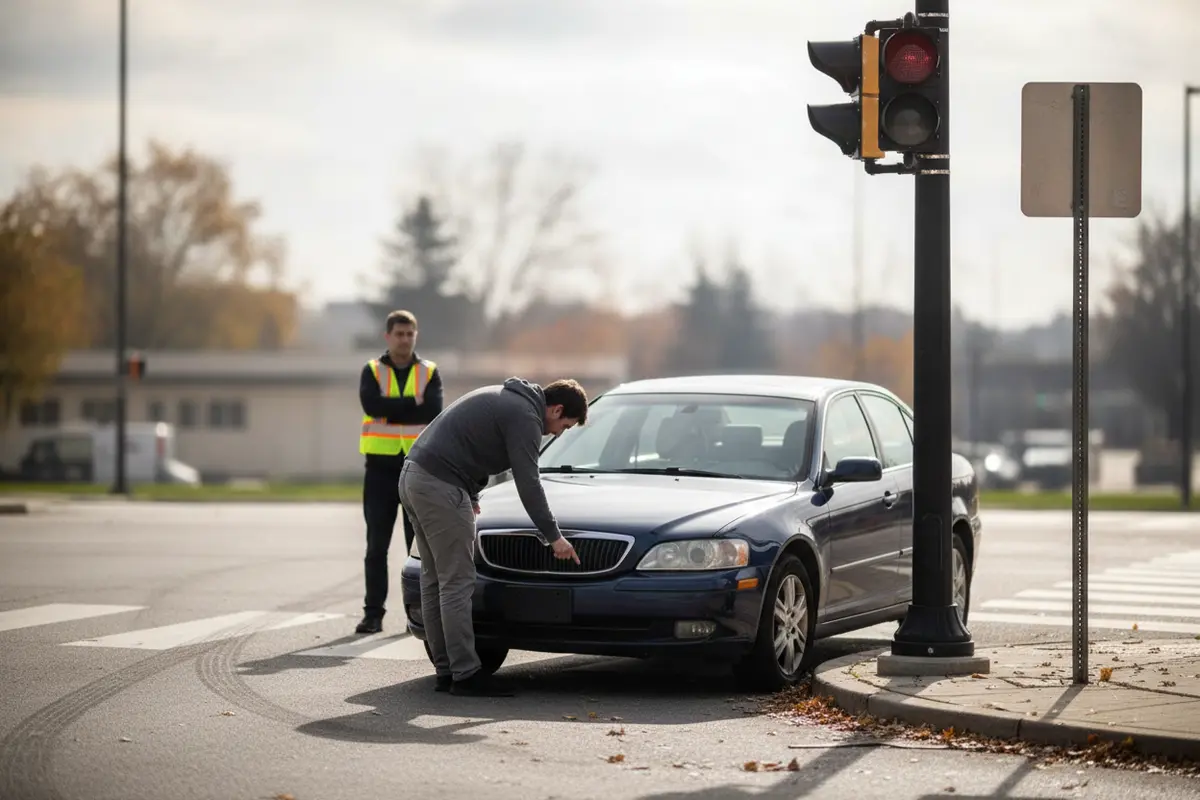
Do not return to a hazardous location to take pictures. If you can safely document the scene later, include the date and explain what may have changed since the incident. Construction, weather, lighting, and traffic patterns may differ. Tell counsel when an image was taken so that it is not mistaken for a contemporaneous record.
How do deadlines and response instructions fit into the review?
The response instructions and any stated date should be checked promptly, because the correct next step depends on the specific paperwork and case type.
Make a calendar note of every date shown on the citation, notice, or court document, and tell the lawyer about any date that is close or has passed. Do not rely on a search result, a friend’s experience, or a deadline from a different kind of ticket. A lawyer can identify the procedure that applies and explain what action, if any, is needed.
Keep proof of anything you submit or receive, including confirmation numbers, mailing records, court notices, and emails. If you have already paid, requested a hearing, or contacted an agency, explain exactly what you did and when. Those steps may affect what remains available, so do not leave them out when describing the situation.
Put notices in date order and keep the most recent document with the citation. A later court notice or agency letter may update an earlier instruction. If a document seems inconsistent with what you were told, bring both records and note who gave the verbal information and when. A lawyer can help identify which instructions govern and whether clarification is needed. Avoid relying on a general timeline from an online article when your own papers include case-specific directions.
For broader procedural context, a Florida traffic court preparation guide discusses hearing preparation, while the Florida speedy trial rule guide addresses a separate subject that may apply to criminal cases, not every civil citation. The distinction is important: do not assume a rule for one case type controls another.
What can the attorney explain after reviewing the file?
After reviewing the available information, counsel can explain the possible paths, practical tradeoffs, and what additional facts could change the analysis.
A useful discussion should connect the paperwork to your goals. You may want to understand the allegations, protect a driving privilege, reduce disruption to work, or address a matter that could carry consequences beyond a fine. Be clear about what matters most to you, while recognizing that the law and available evidence constrain the options.
An attorney may explain whether the next step involves gathering records, responding to a notice, appearing at a hearing, discussing a resolution, or another procedure. The appropriate course depends on the actual charge, evidence, and governing rules. No review can guarantee a particular result, and an attorney should not promise one based only on a short description.
For a potentially criminal matter, the wider context may matter too. The criminal defense overview explains the firm’s broader practice, and its guide to stages of a Florida criminal case covers general case progression. If your ticket involves an alleged serious driving offense, a lawyer may need to evaluate those issues separately from the citation itself.
Talk with a lawyer about your citation
What should you bring to a traffic-ticket consultation?
Bring the citation, related notices, a concise timeline, and any available records or evidence that could clarify the event.
You do not need to solve the case before asking questions. A well-organized packet helps the lawyer use the discussion to identify gaps and explain what to do next. Put documents in date order and label digital files with a short description. If you are unsure whether something matters, include it in a separate “possibly relevant” folder rather than throwing it away.
| Item to bring | What it can help clarify | Practical note |
|---|---|---|
| Citation and every notice | The alleged violation, case details, instructions, and dates | Bring all pages and keep the originals intact. |
| Timeline and written recollection | Sequence, location, conditions, and questions to follow up | Separate direct memory from later information. |
| Photos, videos, or witness details | Scene conditions, visibility, vehicle position, or other observations | Preserve original files and note when they were created. |
| Driving or vehicle records | Possible license, vehicle, or history-related issues | Bring relevant documents you already have; ask before ordering more. |
| Proof of prior actions | Any payment, submission, agency contact, or hearing request | Include receipts, confirmation numbers, and correspondence. |
Consider writing down questions before the meeting. For example: What type of case is this? What dates should I be watching? What documents are missing? Which options are available, and what are the risks of each? Is there a license or work-related issue that needs separate attention? Clear questions make it easier to leave with a practical understanding instead of an unstructured list of possibilities.
What should you avoid doing before you get advice?
Avoid ignoring official paperwork, altering potential evidence, or making assumptions about the outcome before the specific case is reviewed.
Keep communications and records in one place. Do not discard the citation after taking a photograph, delete a video because it seems unimportant, or ask a witness to adopt a particular version of events. If you contact an agency or court, make a note of the date, person or office reached, and any instructions provided. Confirm important directions through an appropriate official channel.
Do not assume that paying, contesting, or requesting a hearing is the best choice in every situation. Each action may have consequences that depend on the ticket and the applicable rules. If a separate criminal allegation, crash, or license notice is involved, tell the attorney so the review is not limited to a single piece of paper.
The point of preparation is not to predict the result. It is to give counsel accurate information and enough time to identify the issues, explain what is known, and flag what still needs verification. The firm also offers information about how a traffic lawyer may help and a guide to traffic ticket representation in Miami for readers comparing the kinds of assistance they may need.
Request a review of your traffic ticket
Frequently Asked Questions
A traffic-ticket defense attorney can review the ticket, related records, and your account to explain what questions or next steps may apply.
Does an attorney need the original ticket?
Bring the original if it is available, along with a clear copy or photo of every page. If you have misplaced it, tell the lawyer and share any notice, case number, or electronic record you still have.
Should I gather evidence before speaking with a lawyer?
Preserve what you already have, such as photographs, video, correspondence, and witness contact details. Do not trespass, put yourself at risk, or alter a file to obtain or improve evidence. Counsel can advise whether additional material is useful and how to seek it appropriately.
Can a lawyer tell me what will happen based on the citation alone?
The citation is an important starting point, but it may not contain all the facts or records needed to assess a case. A lawyer can explain what the document alleges and identify questions that need answers; no responsible review can guarantee an outcome from the citation alone.
What if a response date is close?
Tell the attorney immediately and provide the paperwork showing the date. Do not wait to organize every other record before asking how to protect your position; the appropriate step depends on the case type and applicable instructions.
What is the best next step?
Gather the citation and related records, write down what happened, and have a qualified attorney review the specific details before choosing how to respond. This practical review can help you understand which facts matter and what questions to resolve next.
