

Refusing a breath test in Florida triggers an immediate license suspension for at least one year. This penalty happens right away even if you are never convicted of a crime.
A Florida DUI breath test refusal leads to an instant license suspension under the state’s laws. For a first refusal, the state will take your right to drive for one year. If you have refused a test before, a second refusal results in an 18-month suspension and a crime charge. This charge can lead to one year in jail and a $1,000 fine. You only have 10 days from the date of your arrest to ask for a hearing to fight this. According to Florida Statute 316.1932, every person in the state agrees to these tests just by driving a car on public roads. A strong defense can help you protect your rights during this short time.
You must understand the rules that let the state take your license without a court case. Many drivers do not know they gave up certain rights when they first got their license. Learning about What is Florida’s Implied Consent Law under Florida Statute § 316.1932? is the first step in your defense. The path begins with
What is Florida’s Implied Consent Law under Florida Statute § 316.1932?
Florida law views driving as a privilege rather than a right. When you get a driver’s license or drive on state roads, you agree to follow certain rules. One key rule is the law of implied consent found in Florida Statute § 316.1932. This law says that by driving, you have already given your consent to take a chemical test if an officer arrests you for a DUI.
The driving privilege and consent
Under this law, any person who drives a vehicle in Florida is deemed to have given their consent to a breath or urine test. This agreement is “implied” because you do not need to sign a new form during a traffic stop. The state assumes you agree to these terms in exchange for the use of public roads. If you are stopped, you should know what to do during a traffic stop to protect your legal rights.
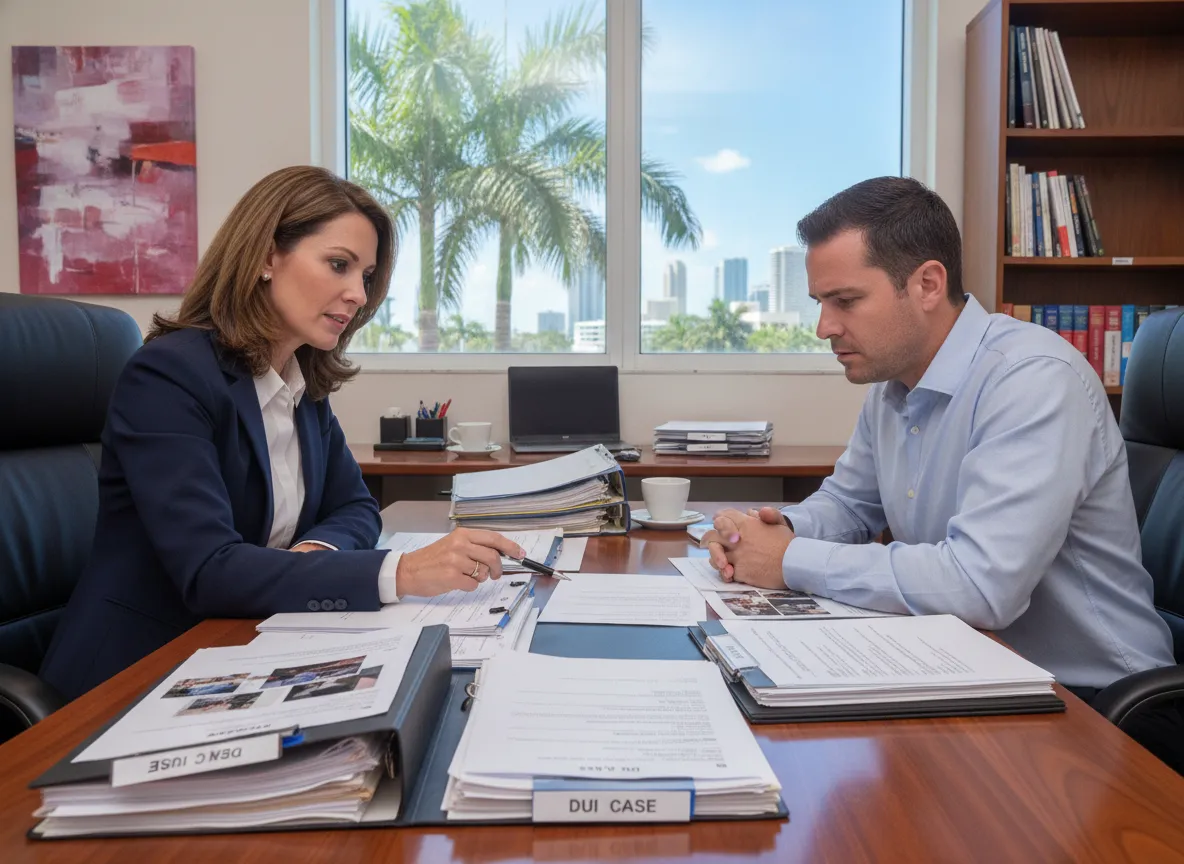
The implied consent law only applies after a lawful arrest. An officer must have a good reason to believe you were driving under the influence. This often comes from your driving patterns or how you act during the stop. If the officer makes an arrest, they can then ask you to submit to a DUI defense legal counsel check or other chemical tests to measure your blood alcohol level.
Types of chemical tests requested
Law enforcement can request different types of tests based on the situation. The most common is the breath test, which measures alcohol levels. If an officer thinks you are under the influence of drugs or other substances, they may ask for a urine test instead. These tests help the state gather evidence for a criminal case.
In some cases, an officer might ask for a blood test. According to Florida law, blood tests are usually only for serious crashes. This includes accidents that cause death or serious bodily injury to another person. Unlike breath tests, blood tests are more invasive and have stricter rules for when they can be used.
When officers ask for testing
A law enforcement officer must follow specific steps when they ask for a test. They must have reasonable cause to believe you were in control of a vehicle while under the influence. They must also tell you about the severe penalties for breath test refusal. This warning is a vital part of the process.
If an officer fails to give this warning, it may help your defense. A skilled lawyer can look at how the officer handled the stop. They check if the officer had a legal reason to ask for the test. If the rules were not followed, the state might not be able to use the florida dui breath test refusal against you in court.
What Happens if You Refuse a Breath Test in Florida?
In Florida, driving is a gift from the state. When you get a license, you agree to follow the rules of the road. This includes the implied consent law. This law means you agree to take a breath or urine test if you are arrested for a DUI. If you say no to the test, you will face quick and harsh costs.
Immediate hold on your driver license
If you refuse a breath test, the police will take your license on the spot. This starts an office-run hold on your right to drive. This hold happens even if you have not been found guilty in court. For a first refusal, the state will stop your driving rights for one year. You will need DUI defense legal counsel to help you get back on the road.
If you have refused a test in the past, the hold is longer. A second or third refusal leads to an 18-month stop. During this time, you may face a “hard stop.” This means you cannot drive at all for 90 days. After that, you might be able to get a permit for work or school.
The 10-day rule for review hearings
After your arrest, you have a very short time to act. You only have ten days to ask for a formal review hearing. The officer will give you a paper permit that lasts for these ten days. If you do not ask for a hearing in this time, you lose your right to fight the hold. This is why you must act fast after a DUI arrest.
This hearing is not held in a criminal court. A state officer will look at the facts of your stop and arrest. They will check if the police had a legal reason to pull you over. They also check if the police told you about the costs of saying no to the test. If the officer did not follow the rules, you might get your license back.
Crime charges for later refusals
A first refusal is usually a civil matter. It hurts your driving record, but it is not a crime by itself. But, Florida law makes a second refusal a crime. If you have refused before, a new refusal is a first-degree misdemeanor. This can lead to one year in jail and a $1,000 fine. This is on top of any costs from the DUI charge itself.
Use of refusal as evidence in court
Some people think that saying no to the test keeps the state from proving a DUI. This is a mistake. The state can tell the jury that you refused the test. They will argue that you said no because you knew you were drunk. This can make it much harder to win your case in front of a judge or jury.
The state will also use other types of proof. They will show how you drove your car or how you talked to the officer. They may show video from the police car or the jail. You will need a strong plan to fight these severe penalties for breath test refusal.
| Penalty Type | First Refusal | Subsequent Refusal |
|---|---|---|
| License Suspension | 12 months. | 18 months. |
| Criminal Charge | None (Civil Penalty). | 1st Degree Misdemeanor. |
| Hardship Eligibility | Immediate if hearing waived. | 90-day hard suspension. |
| Potential Jail Time | None. | Up to 1 year. |
| Fine Amount | None. | Up to $1,000 |
Is It a Crime to Refuse a Breathalyzer Test in Florida?
In Florida, refusing a breathalyzer test after a lawful arrest for driving under the influence (DUI) carries serious administrative penalties. However, whether it is a criminal offense depends on your driving history. A first refusal is not a criminal charge, but repeat refusals can lead to criminal prosecution.
First-Time Refusals: Administrative Penalties
If you refuse a breath test for the first time, your driver’s license will be suspended for one year. This suspension is an administrative penalty, meaning it is handled by the Department of Highway Safety and Motor Vehicles (DHSMV), not the criminal courts. You may request a formal review hearing to challenge the suspension, but this must be done within 10 days of your arrest.
Additionally, a first refusal can be used as evidence against you in a DUI criminal case. Prosecutors can argue that your refusal shows you knew you were impaired. The implied consent law states that by driving on Florida roads, you agree to a breath, blood, or urine test if an officer suspects you of DUI.
Second or Subsequent Refusals: Criminal Charges
Refusing a breath test a second or subsequent time, after your license was previously suspended for a prior refusal, is a criminal offense in Florida. This is charged as a first-degree misdemeanor under Florida Statute § 316.1939.
A conviction for a second or subsequent refusal can result in significant penalties. These may include up to one year in county jail, a fine of up to $1,000, and further driver’s license suspension. Understanding these distinct consequences is vital for anyone facing a DUI charge in Florida, particularly regarding breath test refusals.
The 10-Day Window: How to Request a Formal Review Hearing
Facing a DUI arrest in Florida begins a critical timeline. If you refused a breath test, your driving privilege is immediately at risk. The Department of Highway Safety and Motor Vehicles (DHSMV) will suspend your license. You only have ten days from the arrest to request a formal review hearing. Missing this window means losing your chance to challenge the suspension.
What is a Formal Review Hearing?
A formal review hearing is an administrative proceeding. It allows you to dispute the suspension of your driver’s license. This hearing is separate from any criminal court case. The purpose is to review the facts surrounding your arrest and breath test refusal. Your driving privilege hangs on this hearing, making it crucial to act fast.
During the hearing, an administrative law judge will listen to evidence. This includes testimony from the arresting officer. It also involves any evidence your legal team presents. A favorable outcome can prevent a prolonged license suspension. This helps you keep your driving freedom while your criminal case proceeds.
Protecting Your Driving Privilege
When you refuse a breath test, Florida law imposes penalties. For a first refusal, your license is suspended for one year. A second refusal leads to an 18-month suspension. This is why the formal review hearing is so important. It’s your opportunity to fight these administrative penalties.
Having a criminal defense lawyer at this stage is essential. An attorney understands the complex rules of these hearings. They can gather evidence, question witnesses, and build a strong defense. This helps protect your ability to drive. For more details on these laws, see the official Florida Statutes Chapter 322.
Steps to Request and Defend Your License
Acting quickly after a Florida DUI breath test refusal is vital. Follow these steps to safeguard your driving privilege and navigate the formal review process:
- Contact a DUI Defense Attorney: Reach out to a lawyer specializing in DUI cases immediately. They can help you understand your rights and the deadlines. This early step is key to preserving your options.
- Request the Hearing within 10 Days: Your attorney will file a formal request for a hearing with the DHSMV. This must happen within ten calendar days of your arrest. This request prevents an automatic license suspension.
- Gather Evidence and Prepare: Your lawyer will collect relevant documents and evidence. This might include police reports, witness statements, and any video footage. They will prepare you for the hearing process.
- Attend the Formal Review Hearing: Your attorney will represent you at the hearing. They will present your case and challenge the state’s evidence. The goal is to prove that the suspension is not justified.
- Receive a Decision and Next Steps: After the hearing, the administrative law judge will issue a decision. If successful, your license suspension may be canceled. Your lawyer will guide you on any further actions needed.
Strategic Defense Options for a Florida DUI Breath Test Refusal
A Florida DUI breath test refusal does not mean you have no path to a defense. While the state uses the refusal as evidence of guilt, a lawyer can challenge the facts of the arrest. Our firm uses effective DUI defense strategies to protect your rights and your license in South Florida courts.
Challenging the Traffic Stop
Every case begins with the first contact on the road. Law enforcement officers must have reasonable suspicion of a crime or a traffic rule break to stop you. If the officer stopped you without a clear reason, the stop might be illegal. In these cases, your lawyer can ask the court to toss out the evidence. This can lead to a win because the state cannot use any facts found after the bad stop.
Checking the Implied Consent Warning
Florida law has strict rules for officers when they ask for a breath sample. Before a refusal brings a penalty, the officer must read the implied consent warnings to the driver. This warning says that you will lose your license for one year for a first refusal. If the officer did not read these warnings right, the refusal might not hold up. We look at police video to see if the officer gave you the right facts about your choice.
Medical or Machine Issues
Sometimes, what looks like a refusal is really a medical problem or a machine error. You may have tried to give a sample but had a health issue that kept you from blowing enough air. Also, a lawyer can check if the machine worked well. Breath machines must have regular checks and tuning to be used in court. If the device had a glitch or was not kept up, the state may not be able to prove you truly refused a lawful test.
Requesting a Review Hearing
You have exactly 10 days after an arrest to ask for a hearing to fight a license loss. At this hearing, an officer must decide if the police had a good reason for the arrest and if you got the right warnings. If the officer does not show up at this hearing, your license loss could be set aside. Moving fast is the only way to save your right to drive and find a way to stay on the road.
Protecting Your Future: The Benefit of Galanter Law’s Experience
Getting a DUI defense legal counsel right after an arrest is key to your future. In South Florida, the law moves fast. The state works hard to win DUI cases. Yale Galanter has over 35 years of legal work. He was a prosecutor under Janet Reno. This past work gives him a deep look at how the state builds a case. He knows where to find the weak spots in their proof.
The prosecutor edge for your case
Knowing how the state works is a big part of a strong defense. Yale Galanter was a prosecutor, so he knows the steps police must take for a lawful arrest. He can see if an officer lacked the reasonable suspicion to stop your car. This skill can be the link between a win and a loss in court.
Saving your right to drive
In Florida, your right to drive is at risk as soon as you are arrested. Under state law, a license loss for a test refusal starts right at the time of arrest. You have just 10 days to ask for a hearing to fight this loss. Our firm offers 24/7 help so you do not miss this short window. We fight the severe penalties for breath test refusal to help you stay on the road.
Strong defense for criminal charges
A florida dui breath test refusal is not just a license issue. It can lead to jail time. A second refusal is a crime that can lead to one year in jail and a $1,000 fine. Galanter Law uses effective DUI defense strategies to protect your name. We check every fact, from the test tool to the words the officer used, to build your case.
Arrested for refusing a breath test in Florida?
Galanter Law can review your stop, protect your license, and build a defense strategy for your DUI refusal case.
Frequently Asked Questions
How long is your license suspended for a first breath test refusal in Florida?
If you refuse a breath test for the first time, the state will take your license for one year. This penalty is a legal act by the Department of Highway Safety and Motor Vehicles. The loss of your right to drive starts at once when the police arrest you. You might be able to get a permit for work or school if you act fast. You should talk to a law firm about how to get back on the road.
What are the penalties for a second breath test refusal in Florida?
A second refusal leads to much worse results than a first time. Your driver license will be taken for 18 months. Based on Florida law, this act is also a first-degree misdemeanor. You could face up to one year in jail and a fine of $1,000. These crime charges are not the same as the license loss. This makes it vital to have a strong defense in court and at the state hearing.
Can you appeal a license suspension after a DUI refusal in Florida?
Yes, you can fight the loss of your right to drive. You have only 10 days from the date of your arrest to ask for a formal review hearing. This meeting is held by the Florida DHSMV. A hearing officer will check if the police had a good reason to stop you. They also check if you were told about the costs of saying no. If you win, you might get your license back at once.
Does refusing a breath test prevent a DUI arrest in Florida?
No, saying no to the test does not stop an officer from taking you to jail. The police can use other facts to prove you were driving while drunk. This includes your driving habits and how you did on physical tests. The fact that you said no is also used as evidence in court. It can be seen as a sign of guilt by a jury. You need a lawyer to help you fight these charges.
Ready to fight your Florida breath test refusal charge today?
A Florida DUI arrest can cost you your job, your home, and your freedom if you do not act now to fight these heavy charges. You only have ten days to ask for a hearing to save your driver’s license before the state suspends your legal right to drive. Talk to our DUI defense legal counsel team today to learn how we help people fight these cases in court every day.
Do not leave your future to chance when you can have an expert on your side to fight for you in the courtroom. Ready to protect your rights? Call (305) 576-0244 to schedule a free, confidential consultation to protect your license and your future.
