

If law enforcement is investigating a death and you may be connected to it, speaking with a manslaughter lawyer early can help you understand the situation before deciding how to respond. The questions you ask should clarify what is known, what remains uncertain, and what steps may protect your rights without interfering with an investigation.
Contact Galanter Law to discuss your situation
An investigation is not the same as a filed charge, and the facts can differ widely from one case to another. This guide offers general information, not legal advice about a specific event. A lawyer who reviews the actual facts can explain how Florida law may apply. Any legal-information content should be reviewed by named counsel before publication.
What should you ask a manslaughter lawyer first?
Start by asking what the investigation appears to concern, what the attorney needs to assess it, and what you should do before speaking with investigators.
You may not know the exact allegation or have the complete account of what happened. Ask the lawyer to explain which facts are confirmed, which are disputed or unknown, and what information is still needed to evaluate the situation. You do not need to guess at an answer or fill in gaps in your memory. Tell the lawyer what you know and clearly identify what you do not know.
Useful opening questions include:
- What do you understand the investigation to be about, based on what I have told you?
- What facts or documents would you need to review before giving a more specific assessment?
- Has a charge been filed, or do we only know that an investigation is underway?
- What should I do if an investigator contacts me?
- Who should I contact if I receive paperwork, a request for an interview, or notice of a court date?
Ask the lawyer to distinguish a preliminary impression from a conclusion. Early information may be incomplete. A careful review may require records, witness accounts, physical evidence, or other material that is not yet available to you.
What does a manslaughter investigation involve?
It is an inquiry into the circumstances of a death and whether the available evidence supports a criminal allegation.
Investigators may seek accounts from people who were present, review physical or electronic records, and examine the sequence of events. What they seek will depend on the incident. A lawyer can help you understand what the authorities appear to be examining and whether a particular request calls for a response through counsel.
Do not assume that an investigation means a charge has already been filed, or that an arrest automatically resolves what happened. The legal significance of an event depends on its facts and the applicable law. For general orientation to the broader stages of a Florida criminal case, see this guide to criminal case stages. The firm also has information on criminal defense in Florida.

What should you ask about the evidence?
Ask what evidence exists, how it was obtained, and what it can—and cannot—show.
A useful review does not treat an allegation as proof. Ask whether the attorney has access to reports, recordings, photographs, medical or forensic records, messages, or witness accounts, and which materials remain unavailable. The right questions depend on the event; not every type of evidence will exist in every investigation.
You can ask:
- Which evidence has the lawyer reviewed directly, and which details come from my account or another source?
- Are there inconsistencies among accounts, records, or the timeline?
- Could a recording, message, or other record provide context that is missing from a summary?
- What steps can preserve relevant material without altering, deleting, or circulating it?
- What additional evidence should the lawyer seek through the appropriate legal process?
Preserve relevant material in its original form. Do not edit or delete messages, photographs, videos, or other records. Avoid posting about the incident or asking other people to change their accounts. Tell your lawyer where potentially relevant material may be, including records you believe are incomplete or unfavorable. The lawyer can advise on proper preservation and how evidence may be obtained or reviewed.
Florida criminal discovery has its own rules and procedures. A lawyer can explain which materials may be available and when; this overview of criminal discovery in Florida offers additional general context.
What should you ask about the legal allegation?
Ask the lawyer to identify the possible legal theory and explain which facts matter to that theory.
The word “manslaughter” does not tell you by itself what investigators believe happened, what facts they may rely on, or what the final charge might be. Ask the lawyer to explain the potential allegation in plain language, and to distinguish what the law requires from what investigators may be trying to establish. Do not rely on online descriptions to classify a specific event.
Questions to consider include:
- What possible offense or legal theory is being considered, if that is known?
- What facts could be important to how the incident is classified?
- What facts are disputed, and what information could help clarify them?
- Could the alleged conduct involve a different offense or no charge at all, depending on the evidence?
- What legal consequences should I understand if a charge is filed?
These are questions for a case-specific legal review, not an invitation to reach your own conclusion. Florida law and the facts of a particular death can be complicated. For example, questions about whether conduct involved an intentional act, negligence, or another circumstance require careful legal analysis. A page about culpable negligence in Florida may help explain one related legal concept, but it does not determine how any individual case will be treated.
What should you do if investigators contact you?
Stay calm, avoid guessing or volunteering a detailed account, and promptly ask a lawyer how to respond.
Do not lie, destroy records, evade lawful process, or interfere with witnesses. At the same time, do not assume you must answer every question immediately or that an informal conversation has no consequences. The safest response depends on the circumstances and your legal status. Ask a lawyer to advise you before you agree to an interview or provide a statement.
If you have already spoken with investigators, write down for your lawyer when and where the conversation happened, who was present, and what you remember being asked. Keep the account factual. Do not coordinate stories with anyone else or try to reconstruct details by repeatedly discussing them with witnesses.
If you are arrested or receive official paperwork, tell the lawyer promptly and share the documents. Questions about release or a first court appearance are separate from the investigation itself. This guide to Florida bond hearings describes that general process.
What should you ask about preserving and reviewing records?
Ask what records may matter, how to preserve them, and who should obtain them.
Relevant information may include messages, call records, photographs, video, location information, work records, or contact details for people who saw events before or after the death. This is not a checklist of evidence that will exist in every case. Let the lawyer determine what is relevant and how to seek it lawfully.
Before a consultation, make a private list of possible records and where they may be stored. Do not alter files, access another person’s account, or try to obtain material through a method you are not authorized to use. Ask whether a formal preservation request or another legal step may be appropriate. If there are physical items connected to the incident, do not move, clean, discard, or handle them to investigate on your own; ask counsel what to do.
Depending on the facts, the event could raise issues involving an alleged assault or battery, but labels alone do not establish what occurred. Learn more about the distinction in this explanation of assault versus battery in Florida, and ask counsel whether that topic is relevant to the situation.
What should you bring to a consultation?
Bring official documents, a careful timeline, and a list of questions; do not edit or discard potential evidence.
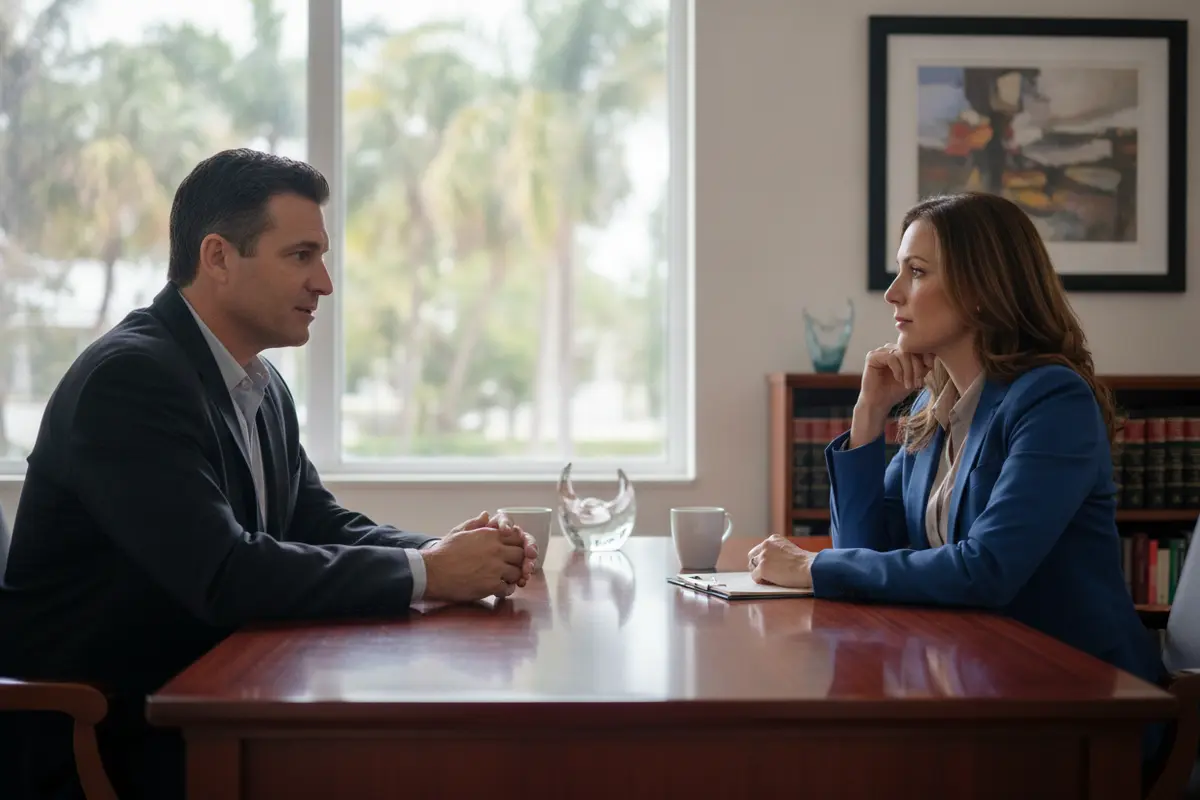
A focused consultation helps the lawyer identify what is known and what needs follow-up. If available, bring arrest or court paperwork, notices, contact information for investigators, and any documents you have received. Include dates and names only when you can recall them accurately. Mark uncertain details as uncertain rather than trying to make the timeline appear complete.
Before the meeting, consider preparing:
- A short timeline of events, with approximate times clearly labeled as estimates.
- A list of people who may have relevant information, without contacting them to discuss what they should say.
- A list of records or devices that may contain relevant information.
- Copies of official documents and a note about when each was received.
- Your main questions about the investigation, communication, and immediate next steps.
Ask the lawyer how to provide sensitive records safely. Do not send private information through a channel unless the firm directs you to do so. A consultation is also a chance to understand the proposed scope of representation, communication practices, and fee arrangement. Ask for clear explanations rather than assuming any particular service or result.
If you are weighing how to choose counsel, review these practical questions about choosing a criminal lawyer and finding a defense attorney in Miami.
How can you compare legal options?
Compare the scope of the proposed work, the information reviewed, and the communication plan—not a promised outcome.
Different lawyers may recommend different immediate steps because they have different information or understand the facts differently. Ask each lawyer to explain the basis for recommendations and identify what could change after reviewing more evidence. No consultation can guarantee a particular result.
| Topic | Questions to ask | Why it matters |
|---|---|---|
| Investigation status | What do we know about whether a charge has been filed? | Helps separate current facts from assumptions. |
| Evidence review | Which records have been reviewed, and what is still missing? | Shows whether an assessment is preliminary. |
| Immediate guidance | What should I do if investigators contact me? | Clarifies how to handle a time-sensitive request. |
| Representation | What work is included, who will communicate with me, and how are fees handled? | Sets expectations before making an engagement decision. |
| Next steps | What should happen next, and when should I expect an update? | Creates a practical plan without promising an outcome. |
Use the answers to understand the proposed approach, not to seek a guarantee. You may ask the lawyer to explain alternatives, uncertainties, and what further review would involve. If a recommendation is unclear, ask for it in plain language before deciding how to proceed.
Schedule a consultation to discuss your questions
What legal source can help identify Florida law?
Use an official source to locate the current law, then ask a lawyer how it applies to the facts.
The Florida Legislature website provides access to official Florida legislative materials. A statute is only one part of a legal analysis: its application can depend on the precise facts, related laws, and court decisions. Do not use a general online summary or an isolated statutory phrase as a substitute for advice about an investigation.
When a lawyer discusses a statute, ask which provision is relevant, what elements must be considered, and whether any related law or exception may affect the analysis. If a source is difficult to understand, ask the lawyer to explain the important language rather than relying on a search result or social-media post.
Contact Galanter Law to discuss a case review
Frequently Asked Questions
Should I hire a manslaughter lawyer before charges are filed?
You can seek legal advice while an investigation is ongoing. A lawyer can review what you know, explain how to handle contact from investigators, and advise on preserving relevant information. Whether to retain counsel is a personal decision based on the circumstances.
Does an investigation mean I will be charged?
No. An investigation means authorities are examining what happened; it does not by itself establish that a charge will be filed or prove guilt. The outcome depends on the facts, evidence, and legal decisions in the case.
What if I already gave investigators a statement?
Tell your lawyer what happened as accurately as you can, including when the conversation occurred and whether you received any paperwork. Do not try to revise the account or discuss it with witnesses to align stories. Counsel can advise you about appropriate next steps.
Can I delete messages or posts that mention the incident?
Do not delete, edit, or conceal potentially relevant material. Preserve it and ask a lawyer how to handle it. If you are concerned about privacy or access to an account, explain that concern to counsel before taking action.
What is the best next step?
The best next step is to get advice based on the actual facts, preserve potentially relevant information, and avoid making assumptions about what the investigation means. A manslaughter lawyer can help you understand what is known, identify unanswered questions, and discuss a practical response. This article is general information and is not a substitute for advice from a lawyer reviewing your situation.
