

After a Florida DUI arrest, a DUI defense attorney can help protect important rights while the evidence and deadlines are still fresh. The early work usually includes reviewing the traffic stop, preserving recordings and testing records, addressing the administrative license process, and building a strategy for the criminal case.
Contact Galanter Law for a free initial consultation.
A DUI defense attorney reviews the stop, arrest, field sobriety observations, chemical testing, paperwork, and available video. The attorney also identifies the separate Florida driver’s license deadline and evaluates options in the criminal case. This early review does not promise a result, but it can preserve evidence and clarify the next decisions.
Florida DUI cases involve two related but separate tracks. The criminal case concerns allegations such as impaired driving or an unlawful alcohol level. The administrative license matter concerns the driver’s privilege to operate a vehicle. Each track has its own procedures, and a missed license deadline cannot be repaired simply by waiting for the first criminal court date.
What Happens in the First Hours After a Florida DUI Arrest?
A person should preserve every document, avoid detailed statements about the incident, and obtain prompt legal advice about both the criminal case and the driver’s license. The first review should focus on deadlines, evidence preservation, release conditions, and the information needed to assess the stop and testing.
Keep every document together
Keep the citation, notice of suspension, property receipt, release paperwork, bond conditions, and any court paperwork in one secure place. Write down the arrest date, release date, court date, and instructions given by law enforcement or the jail. Do not discard paperwork that seems repetitive. A notice that appears administrative may contain a deadline that matters independently of the criminal case.
Limit unnecessary discussion
Avoid posting about the arrest on social media. Do not send detailed explanations by text or email, and do not contact a potential witness to coordinate a story. Preserve relevant messages and photographs in their original form instead. A lawyer can help determine what information should be shared, what should be preserved, and how to respond to questions without adding unnecessary statements to the record.
Preserve recordings and timeline evidence
Save photographs, location history, receipts, medical records, and other information that may help establish the timeline. Do not alter, delete, or recreate digital evidence. Tell counsel what records exist and where they are stored. Counsel may then request additional materials, including reports, dispatch records, body-camera footage, dash-camera footage, and chemical-testing records.
Florida law generally treats driving or being in actual physical control of a vehicle while impaired as DUI conduct. It also addresses an unlawful blood or breath alcohol level. The legal meaning of those facts depends on the evidence and the applicable statute, not simply on the fact that an arrest occurred. The Florida DUI defense resource provides related information about the firm’s practice.
How a DUI Defense Attorney Reviews the Traffic Stop
A DUI defense attorney compares the reason for the initial stop with the officer’s observations and the available recordings. The review asks what the officer knew at each stage, whether the detention expanded lawfully, and whether the written report accurately reflects the encounter. The goal is a fact-specific assessment, not an automatic promise that evidence will be excluded.
Why the vehicle was stopped
Counsel starts with the first claimed basis for the stop. That basis may involve speeding, lane movement, an equipment issue, a collision, a tip, or another observation. The important question is what the officer observed before activating the lights or otherwise detaining the driver. Later observations may explain why the officer investigated DUI, but they do not automatically supply a missing reason for the initial stop.
When the encounter became a DUI investigation
A traffic encounter can develop into a DUI investigation. Counsel examines the sequence of questions, requests for documents, requests to exit, comments about alcohol, observations of speech or movement, field sobriety exercises, and requests for chemical testing. The timing can matter because the legal justification for one step may differ from the justification for a later step.
Reports, recordings, and witnesses
The arrest report is one account of the event. Body-camera or dash-camera video may show the driver’s words, the officer’s instructions, the duration of a detention, and whether the report leaves out relevant context. Dispatch audio and witness accounts may add information about the driving pattern or the moments before the stop. Counsel compares those sources rather than relying on a single narrative.
A review of rights during a Florida traffic stop can help a reader understand why the sequence of events matters. It is not a substitute for advice about a specific arrest. The facts, location, available evidence, and procedural history should be evaluated together.
Request a free initial consultation with Galanter Law about your Florida DUI case.
How Are DUI Tests Challenged in Florida?
DUI testing is challenged by examining the collection method, instructions, equipment, maintenance, timing, chain of custody, and the conditions that may affect interpretation. A chemical result is evidence to analyze, not an automatic conclusion that resolves every issue. The appropriate challenge depends on the type of test and the complete record.
Breath testing
For a breath test, counsel may examine the device records, operator procedures, observation period. Maintenance and inspection history, sample timing, and whether the result is consistent with other evidence. The review may also consider whether the person had recently consumed anything, vomited, burped, used an inhaler, or experienced another circumstance that should be investigated. Counsel must rely on the actual records rather than assumptions.
Blood testing and chain of custody
Blood evidence requires attention to how the sample was collected, identified, stored, transported, and tested. Counsel may review the collection site, the person who drew the blood, the containers and preservatives, laboratory documentation, analyst qualifications, and chain-of-custody records. A question about one link does not automatically invalidate a result, but it can identify an issue for further investigation or litigation.
Field sobriety exercises
Field sobriety observations are also fact-specific. Counsel may assess lighting, surface, footwear, weather, traffic, instructions, demonstrations, medical conditions, balance, fatigue, injuries, language, and the officer’s description of performance. These observations should be compared with video and the surrounding circumstances. A poor performance on an exercise does not by itself establish every element of a DUI charge.
Refusal and other testing issues
A refusal to provide a breath, blood, or urine sample can create separate legal and license concerns. The reason for the request, the warnings given, the timing, and the person’s response should be documented. The Florida DUI breath-test refusal defense resource addresses related issues. A person should not assume that a refusal ends the case or that it has no consequences.
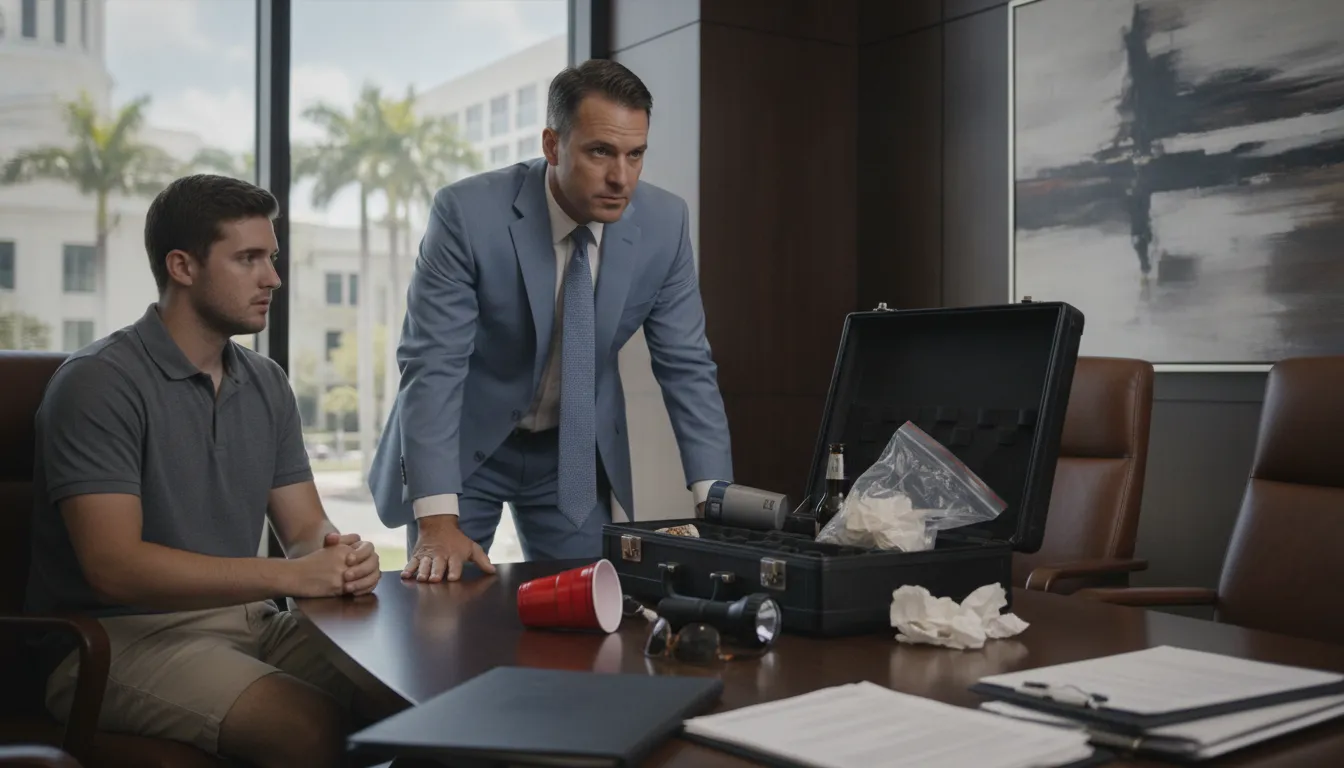
What Is the 10-Day Florida License Suspension Deadline?
Short answer: For certain Florida DUI administrative suspensions, the hearing request deadline is generally 10 days. The notice controls the exact date and procedure.
| Issue. | Criminal case. | Administrative license matter. |
|---|---|---|
| What it concerns. | The DUI charge and possible court penalties. | The privilege to drive and the suspension notice. |
| Where it proceeds. | Florida court system. | Florida driver’s license system. |
| Immediate timing. | Court dates and case deadlines. | Generally a 10-day hearing-request deadline for certain suspensions. |
| Why prompt review matters. | Evidence, motions, negotiations, or trial preparation. | Preserving the opportunity to challenge the suspension. |
After certain Florida DUI arrests, a person generally has 10 days to request a formal or informal review hearing concerning an administrative driver’s license suspension. The deadline is separate from the criminal case. Because the exact notice and facts matter, a person should read the paperwork carefully and obtain prompt advice instead of waiting for a criminal arraignment.
Administrative and criminal cases are separate
The administrative suspension process is handled through the Florida driver’s license system. The criminal case proceeds through the court system. The outcome of one process does not automatically decide the other. A person may need to address the administrative notice even while the criminal charge is being investigated or before the first court appearance.
What a hearing review can examine
The review can involve issues such as whether the person was lawfully arrested. Whether the required conditions for the suspension were present, and whether the test or refusal was properly documented. The relevant issues depend on the type of suspension and the notice. The Florida Highway Safety and Motor Vehicles administrative suspension guidance is an official starting point, but a specific notice should be reviewed on its own terms.
Make a deadline checklist
- Locate the notice of suspension and identify the arrest date and stated deadline.
- Ask counsel whether a formal or informal review request is appropriate for the notice.
- Confirm how and where the request must be submitted.
- Keep proof of the request and all related paperwork.
- Ask about any temporary driving privilege, ignition interlock requirement, or other option that may apply.
Do not rely on a general internet deadline if the paperwork states a different date or procedure. A lawyer can confirm which facts and documents control. This is one reason prompt contact matters after an arrest.
How Does a DUI Defense Attorney Approach Negotiations and Court?
A DUI defense attorney uses the evidence review to evaluate negotiations, motions, and trial preparation. Counsel may seek a dismissal, reduction, or other resolution when supported by the facts and law, but no attorney can promise a particular result. If a case proceeds, preparation should address the State’s evidence and the client’s available options.
Evaluating the State’s case
Counsel organizes the stop evidence, arrest report, video, witness information, testing records, statements, and charging documents. The review asks whether the State can prove each required element and whether the evidence is admissible and reliable. It also identifies gaps that may affect a motion, a negotiation, cross-examination, or the decision to proceed to trial.
Pretrial motions and negotiations
Depending on the facts, counsel may file a motion concerning an unlawful stop, detention, search, statement, or test result. A court decides such motions based on the evidence and applicable law. Negotiations may occur before or after motion practice. The strength of a proposal depends on the record, the charge, the client’s circumstances, and the prosecutor’s evaluation. A lawyer should explain the risks and alternatives before a client makes a decision.
Preparing for a court appearance
Court preparation includes explaining the allegations, reviewing available options, identifying important dates, and discussing what the client should expect. Counsel may organize exhibits, prepare witnesses, analyze video, and develop cross-examination questions. The defense should be ready to address both favorable and unfavorable evidence. Preparation is not a guarantee of dismissal, but it allows decisions to be made from a more complete understanding of the case.
For broader context about a first case, see the firm’s guide to a first-time DUI offense in Florida. The appropriate strategy still depends on the individual facts. A person should not choose a plea, waive a hearing, or make a statement based only on a general article.
What Should You Do After a DUI Arrest in Florida?
After a Florida DUI arrest, preserve the record, protect the 10-day license deadline, avoid unnecessary statements, and speak with counsel before making strategic decisions. The most useful first step is to gather the paperwork and create a clear timeline. Counsel can then assess the stop, testing, license process, and criminal case together.
Use a practical evidence file
Create a folder for the notice, citation, release documents, court information, photographs, receipts, medical records, and witness names. Keep digital files in their original format and note when each item was created. This organization can help counsel identify missing records and compare the official account with independent evidence.
Ask focused questions
Ask what deadline applies to the license notice, whether a hearing request is available, what evidence should be preserved. Whether counsel needs authorization to request records, and what next court date or condition requires attention. Avoid asking an attorney to guarantee an outcome. Good advice begins with complete information and a review of the actual documents.
Galanter Law serves clients in South Florida and handles criminal defense matters involving DUI and other traffic-related charges. The firm’s criminal defense practice provides additional information about representation. This article is general information, not legal advice for a particular person or case.

Get a free initial consultation with Galanter Law after a Florida DUI arrest.
Frequently Asked Questions
These answers address common questions about the immediate post-arrest work of a DUI defense attorney in Florida. The notice, evidence, and case history control the advice for any individual matter.
When should I contact a DUI defense attorney after an arrest?
Contact a DUI defense attorney as soon as practical after the arrest. Early advice can help preserve video and records, identify the administrative license deadline, and reduce the risk of an avoidable statement or missed procedure. The attorney still needs to review the actual notice and facts before giving case-specific advice.
Can a DUI defense attorney challenge a breath test in Florida?
Yes. Counsel may review the breath-test device records, observation period, operator procedures, maintenance history, timing, and surrounding evidence. The attorney may also compare the result with video, witness accounts, and other testing. Whether a challenge is appropriate depends on the records and the facts. No challenge guarantees exclusion or dismissal.
What is the 10-day deadline after a Florida DUI arrest?
For certain administrative DUI suspensions, the request for a formal or informal review hearing generally must be made within 10 days. The exact deadline and available procedure depend on the notice and circumstances. Read the notice promptly, confirm the date, and obtain advice about how the request must be submitted.
Can my DUI charges be dismissed or reduced?
Possibly, but no attorney can promise a result. After reviewing the stop, statements, testing, video, witnesses, and charging documents, counsel may evaluate motions, negotiation, dismissal, reduction, or trial. The available options depend on the evidence, the charge, the client’s circumstances, and the applicable law.
Can a DUI defense attorney help with a first-time offense?
Yes. A first-time case still requires review of the stop, testing, license consequences, court requirements, and potential resolutions. The absence of a prior DUI does not eliminate deadlines or guarantee a favorable result. Counsel can explain the available options after reviewing the specific record.
Contact Galanter Law After a Florida DUI Arrest
Contact Galanter Law promptly if you need help reviewing a Florida DUI arrest, license notice, or next court step. A free initial consultation can provide an opportunity to discuss the paperwork and available options. No article can evaluate the facts of a specific case or promise a result.
