

If you are accused of petty theft in Florida, ask a petty theft attorney what charge is being considered, what evidence exists, what deadlines apply, and what options may be available. The answers depend on the specific facts and records, so a focused first conversation can help you understand what to preserve and which decisions need attention.
What exactly is the allegation?
Ask the attorney to identify the conduct the state says occurred, the property involved, and the specific offense or charge under consideration.
Do not assume that a label used by a store employee, security guard, or someone in a conversation is the final charge. An accusation, an investigation, an arrest, and a filed court charge are different stages. Ask what stage the matter has reached and what documents show that status. If you have paperwork, ask counsel to identify the language that matters and explain any terms you do not understand.
Florida theft law includes different classifications and potential consequences. The classification may turn on the facts and applicable law, including the value alleged and other circumstances. Ask which facts are confirmed, which are disputed, and which remain unknown. You can review the Florida Legislature’s official site for access to Florida Statutes, but a general statute reference cannot decide how the law applies to an individual situation: Florida Legislature.
For the distinction between a general accusation and other theft-related allegations, see the firm’s shoplifting defense information and criminal defense services. These pages provide background, not an assessment of your particular facts.
What evidence should the attorney review?
Ask what records or evidence may clarify the allegation, whether they can be obtained, and whether anything should be preserved promptly.
The answer depends on what happened and what investigators, a store, or another person may have collected. Ask specifically whether the matter could involve surveillance video, receipts, transaction records, inventory records, witness accounts, statements, photographs, messages, or other electronic records. Ask which materials may be time-sensitive and what proper steps are available to preserve them. Do not try to obtain private materials yourself or contact a witness to shape an account.
A useful question is, “What evidence would help you evaluate the account, and how should I preserve what I already have?” This keeps the discussion focused on lawful preservation and review rather than trying to investigate or prove the case on your own.

Before meeting counsel, write a simple chronology while events are fresh. Note dates, locations, people present, and conversations you remember. Separate what you personally saw from what another person told you. Keep original records and devices unchanged. Do not edit, delete, post about, or send potentially relevant material to others without first getting advice. The firm’s information about theft-related allegations can help identify broader topics for discussion.
It is useful to distinguish between records you already have and records you believe may exist elsewhere. For example, save the receipt or message in its original form, but do not attempt to access a store system, another person’s account, or a recording you are not authorized to obtain. Make a note of the date, location, and names of people who may know where relevant material is held. Ask the lawyer whether a formal request or another lawful step is appropriate, and how quickly it should be considered.
When reviewing your own records, preserve the context around them. A single screenshot may omit the surrounding conversation or date information. Keep the original message thread or file where possible, and explain how and when you received it. If a device automatically deletes messages or recordings, tell counsel that promptly rather than changing settings without advice. The goal is to make later review more reliable, not to build a version of events by editing material.
What should I ask about deadlines and court dates?
Ask which dates require action, how to confirm them from official paperwork, and who is responsible for each next step.
A lawyer can explain which deadlines apply to your circumstances and what to do if you have incomplete paperwork or have not received a notice you expected. Bring every citation, notice, bond paper, arrest-related document, and court document you have. Do not rely on memory or an informal conversation as the final word on a date or instruction.
Useful questions include:
- Is there a scheduled court date, and where must I appear?
- Is there a filing, response, or other deadline I need to know about?
- How can I verify a date or instruction that seems inconsistent?
- Who should I contact if new paperwork arrives?
- What should I do if I cannot find a document or do not understand a notice?
Do not ignore a date because you expect counsel to handle it. Confirm responsibilities and write down follow-up items. If the matter includes more than one charge or a separate investigation, ask whether each has its own schedule. For general context about case stages, review Florida criminal case stages.
Make a simple calendar from official documents, but treat it as an organizational aid rather than legal advice. Record the date, the source of the date, the location or court listed, and any instruction attached to it. If two documents appear to conflict, do not choose one based on guesswork; ask counsel how to confirm the controlling information. Also ask whether you need to keep checking for additional notices and how to report a change in your mailing address or contact information if that becomes relevant.
Which facts could change the legal analysis?
Ask which details could affect how the allegation is evaluated, and share the full context rather than deciding for yourself which facts matter.
Depending on the situation, relevant questions may include whether you had permission to possess or move the property, what you understood at the time, how the value was calculated, and whether identification or intent is disputed. Ask how statements or actions after the event may be interpreted. If you do not remember a detail, say so rather than guessing or filling in gaps.
Ask the attorney to distinguish confirmed information from assumptions. For example, a store’s reported loss, an officer’s description, and a witness’s account may differ. Ask what records could help assess those differences and whether any issue needs follow-up. The firm’s explanation of theft and robbery distinctions may help frame a general question, but other charge definitions do not replace advice about your facts.
It can help to organize the story without trying to make it sound more favorable. Start with what happened before the incident, describe the sequence as you recall it, and note what you are unsure about. Tell the lawyer about communications or actions that may seem unhelpful as well as those you believe support your account. Counsel needs context to identify what should be checked and what cannot yet be confirmed.
Specificity helps. Rather than writing “I was there in the afternoon,” note an approximate time and what helps you remember it, such as a work shift or a message timestamp. Mark estimates as estimates. If your recollection changed after seeing a document or speaking with someone, explain that sequence too. Do not try to reconcile every inconsistency before the meeting. A candid account of what you remember, what you learned later, and what remains uncertain gives counsel a clearer basis to ask follow-up questions.
Contact the firm to discuss your questions
What outcomes or options should I ask about?
Ask the attorney to explain possible paths and their risks based on the charge, available evidence, and your circumstances, without promising a particular result.
At an early conversation, counsel may not have enough information to assess every option. Ask what additional records or procedural details are needed and when the assessment can be revisited. You can ask what the next procedural steps may be, whether discussions about a resolution could be considered, and what risks may accompany different choices. The answer should distinguish possibilities from predictions.
If a proposed resolution is discussed, ask for all terms in plain language. That can include conditions, financial obligations, possible effects on a record or future opportunities, and what would be expected of you. Ask whether the terms are written and what questions must be answered before making a decision. Do not rely on an informal assurance from someone who has not reviewed the case.
It is also reasonable to ask what the attorney cannot determine yet. Some issues may depend on obtaining records, confirming the formal charge, or reviewing procedural history. Ask what information would change the preliminary assessment and what the next review point should be. If you are comparing paths, request a clear explanation of what each would require from you and what uncertainties remain. This helps prevent a general possibility from being mistaken for a guaranteed result.
The following table can help you organize a first meeting. It is a question checklist, not a prediction of how any case will be handled.
| Topic | Question to ask | What the answer helps clarify |
|---|---|---|
| Charge | What offense is alleged, and what facts support that description? | The legal issue and the current status of the matter. |
| Evidence | What records, video, or statements may exist, and how should I preserve my materials? | What may need review or prompt preservation. |
| Schedule | What dates or response requirements apply, and how do I verify them? | Immediate obligations and follow-up responsibilities. |
| Options | What paths may be considered, and what risks or terms should I understand? | Questions to resolve before making an informed choice. |
| Next steps | What information is missing, and when should we discuss it again? | A practical plan for continued review. |
What should I bring to the first meeting?
Bring available paperwork, original records, and a clear account of what you know, while keeping materials intact.
A concise, organized packet can make it easier to identify unanswered questions. You do not need to decide which detail is legally important before you meet. Bring what you have and ask how the attorney wants additional materials sent.
- All arrest, court, bond, citation, or notice documents you have received.
- A short timeline with dates, locations, people involved, and points you are unsure about.
- Names and contact details for potential witnesses, if known; do not coach or pressure anyone.
- Receipts, messages, photographs, or other relevant records in their original form.
- A list of questions and dates or instructions you need to verify.
- Any communication you received about the incident, with its date and context.
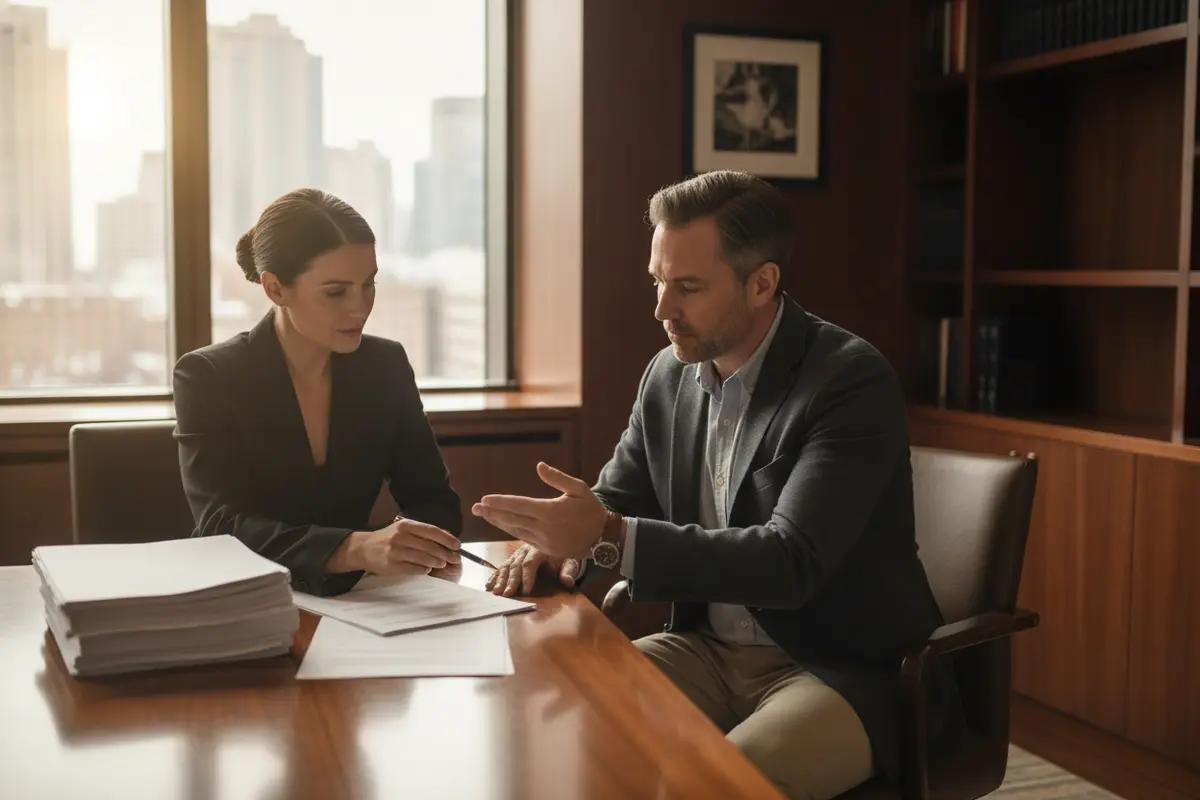
Ask how to share materials securely and whether anything else should be gathered before a fuller review. If you are also concerned about an arrest or booking, ask whether it creates separate immediate issues. The firm’s felony defense information and questions to consider when hiring counsel offer related background for readers comparing what to ask.
Before the meeting, make a separate list of what you want answered first. Put urgent dates and instructions at the top, then note questions about evidence, the status of the matter, and what information is still missing. This helps keep the conversation practical if time is limited. You can also ask how and when to follow up, which documents counsel still needs, and whether you should wait for advice before taking any proposed next step. Afterward, review your notes and promptly clarify anything you misunderstood rather than relying on memory.
A useful preparation method is to divide your notes into three columns: “I saw or did,” “I was told,” and “I do not know.” This prevents secondhand information from being presented as personal recollection. Put documents in date order if that is easy, but do not write on originals or discard duplicates simply to make the packet shorter. If the material is extensive, ask whether counsel prefers a short index or a secure electronic copy.
Before you leave the meeting, repeat back the immediate action items in your own words. Confirm who will obtain any missing records, whether you must do anything before the next contact, and which dates you should monitor. If you are unsure about a term used in the discussion, ask for a plain-language explanation. A clear understanding of the next step is more useful than trying to remember every detail of a long conversation.
What should I avoid while the case is unresolved?
Avoid altering records, discussing the facts publicly, or contacting witnesses about what they should say; ask counsel before taking steps that could affect evidence or be misunderstood.
Preserve relevant material in its original form. Avoid deleting messages, changing files, or creating a revised version of a record that could make its history unclear. If you discover additional information, note where it came from and when you found it, then ask the attorney how to handle it. Do not post an account of the incident or respond to online discussion about it.
If someone contacts you about the allegation, make a note of the time and the nature of the contact, and ask counsel how to respond. Do not ignore official notices or assume that a private conversation changes a court date. Keep a folder of documents and a separate list of questions so you can track what has been received and what still needs attention.
Also avoid trying to resolve uncertainty by coordinating accounts with other people. You can identify potential witnesses for your attorney, but do not suggest wording, ask someone to delete material, or pressure anyone to contact the authorities. If a person sends you information voluntarily, preserve the communication and report its context. Let counsel advise you about appropriate next steps and communications.
If you need to discuss representation, use the firm’s contact page. For general background about the firm, see Galanter Law’s firm information. These are starting points for contact and background, not substitutes for tailored legal advice.
Request a consultation about your next steps
Frequently Asked Questions
Should I speak with a lawyer before answering questions?
Ask an attorney for guidance before answering questions about a suspected offense. The appropriate response depends on the circumstances; do not guess or provide inaccurate information.
Does a store accusation mean a charge has been filed?
Not necessarily. An accusation, an investigation, an arrest, and a filed court charge are different stages. Ask what official paperwork exists and what the current status is.
Can I bring information that may not help my case?
Yes. Give the attorney a truthful account and relevant records, including facts that concern you. Counsel needs the full context to assess the matter and advise you.
Will an attorney be able to tell me the result at the first meeting?
Not always. The attorney may need to review charging documents, evidence, and procedural history before discussing possible outcomes. Ask what additional information is needed and when to follow up.
What is the best next step?
Gather your documents, write down the questions that matter most, and get legal advice tailored to the specific allegation before making decisions.
